

The U.S. Supreme Court Reverses a $1 Billion Copyright Verdict and, Arguably, Renders the DMCA Safe Harbor Obsolete
The Supreme Court unanimously reversed a $1 billion copyright verdict against Cox Communications, holding that an ISP is not contributorily liable for its subscribers’ infringement merely because it continues to serve known infringers. The decision also may have rendered the DMCA safe harbor obsolete.
Basically, the Dictionary Definition of “AI Lawsuit”
Britannica and Merriam-Webster sued OpenAI for copyright infringement and added a Lanham Act claim alleging that ChatGPT’s hallucinations, when attributed to their brands, constitute false designation of origin.

Gracenote Sues OpenAI, and the Evidence Is in the Database Schema
Gracenote sues OpenAI for copying not just its media metadata, but the proprietary relational framework that organizes it. The complaint deploys established compilation copyright doctrine in a new context: as evidence that OpenAI's models encoded the protectable structure of a curated database, not just the data values.
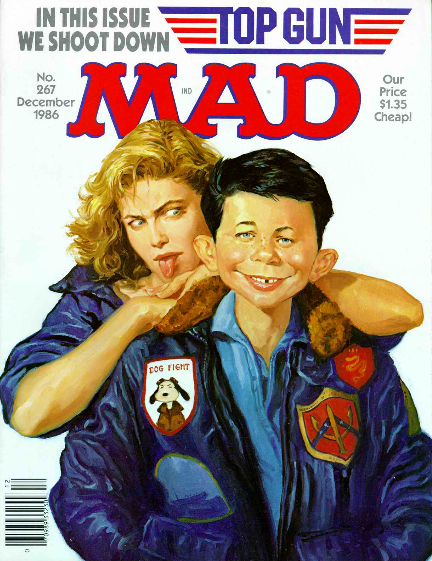
Can a Screenwriter Copyright a Sequel He Was Not Hired to Write?
Judge Rakoff ruled that a writer who secretly contributed scenes to Top Gun: Maverick could not copyright his work because the scenes he claimed to have written were unauthorized derivative works built on Paramount’s IP. Worse, Paramount’s counterclaims for infringement and fraud are now set to go to trial.

Disney Files a Blockbuster Complaint Against Midjourney
On June 11, 2025, the mouse (Disney Enterprises), along with co-plaintiffs Marvel Characters, Lucasfilm, Twentieth Century Fox Film Corporation, Universal City Studios, and DreamWorks Animation, filed a lawsuit for copyright infringement against AI image generator Midjourney, Inc. in the United States District Court for the Central District of California. Disney Enterprises, Inc., et al. v. Midjourney, Inc.; C.D. Cal. Case No. 2:25-cv-05275.